Cybersecurity is too often framed as a pure technology issue, but tools alone won't protect your business. In many cases, the greatest exposure comes from simple security basics that have been ignored, delayed, or applied inconsistently.
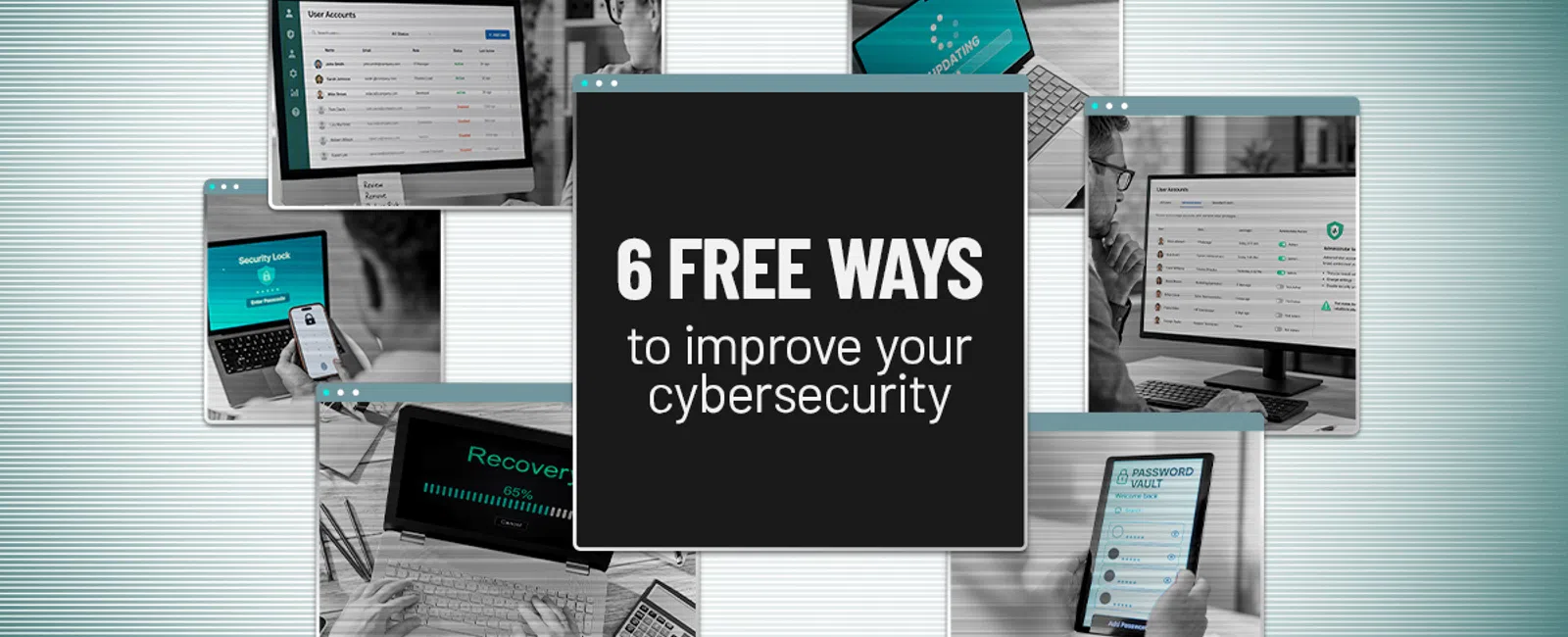
Below are six practical upgrades you can put in place this week to lower your cyber risk fast.
1. Activate multi-factor authentication
If MFA isn't turned on yet, start here. Multi-factor authentication adds an extra layer of identity verification before someone can access an account or system. Instead of relying on a password alone, users must confirm their identity with something additional, such as a code sent by SMS, an authenticator app, a security key, or a biometric scan like a fingerprint or face ID.
With MFA enabled, a stolen or guessed password is far less useful to an attacker because they still need to pass the second checkpoint.
Prioritize MFA for:
- Microsoft 365 or Google Workspace
- Banking and payroll applications
- Cloud storage
- VPN access
- Business-critical applications
Many platforms include MFA at no additional charge, making it one of the fastest ways to strengthen your defenses.
2. Eliminate unused accounts
Old accounts from former employees, contractors, and vendors can stay active long after they should have been removed. These forgotten accounts are easy to miss and can create a direct path into your environment.
Audit your user accounts and ask:
- Does this person still work with us?
- Does this account still have a valid business purpose?
- Does the account need the level of access it currently has?
If the answer to any of those questions is no, update permissions or remove the account altogether.
3. Limit administrator privileges
Administrator accounts carry broad control over your systems. They can install software, change configurations, and disable security settings, which makes them a high-value target for attackers.
Review access across the business and ask:
- Does this user truly need admin rights to do their job?
- Is there a lower access level that fits their role better?
- Should this account have administrative privileges at all?
Remove admin rights wherever possible. Least-privilege access reduces the damage a compromised account can cause.
4. Enable automatic updates
Attackers regularly target known software weaknesses. Updates are designed to close those gaps before they can be exploited.
Make sure automatic updates are turned on for:
- Windows and macOS
- Phones and tablets
- Web browsers
- Microsoft Office
- Antivirus software
- Core business applications
Keeping your systems current helps close security holes before criminals can take advantage of them.
5. Adopt a password manager
Strong passwords are essential, but expecting employees to remember unique, complex credentials for every account is unrealistic.
A password manager makes it easier to:
- Create strong passwords
- Store them securely
- Avoid password reuse
- Share credentials safely when required
When employees have fewer passwords to manage, they are less likely to fall back on weak or reused ones.
6. Test your backups
Backups are only valuable if they can actually be restored. Having copies of your data is not enough if recovery fails when you need it most.
Review your backup process and ask:
- When did our last successful backup run?
- Has anyone tested a restore recently?
- How long would full recovery take?
A backup only protects your business if it works under pressure.
Small improvements deliver real protection
Cybersecurity does not have to begin with a major budget or a complicated project. It starts with fixing the everyday gaps that create avoidable risk.
These six actions reduce common threats without adding complexity or cost.
The key is to implement them consistently and keep them in place. We can help turn these steps into a clear action plan built around your team, systems, and risk profile.
Click here or give us a call at 714-369-8197 to schedule your free 15-Minute Discovery Call to see where you're exposed and what practical steps to take next.