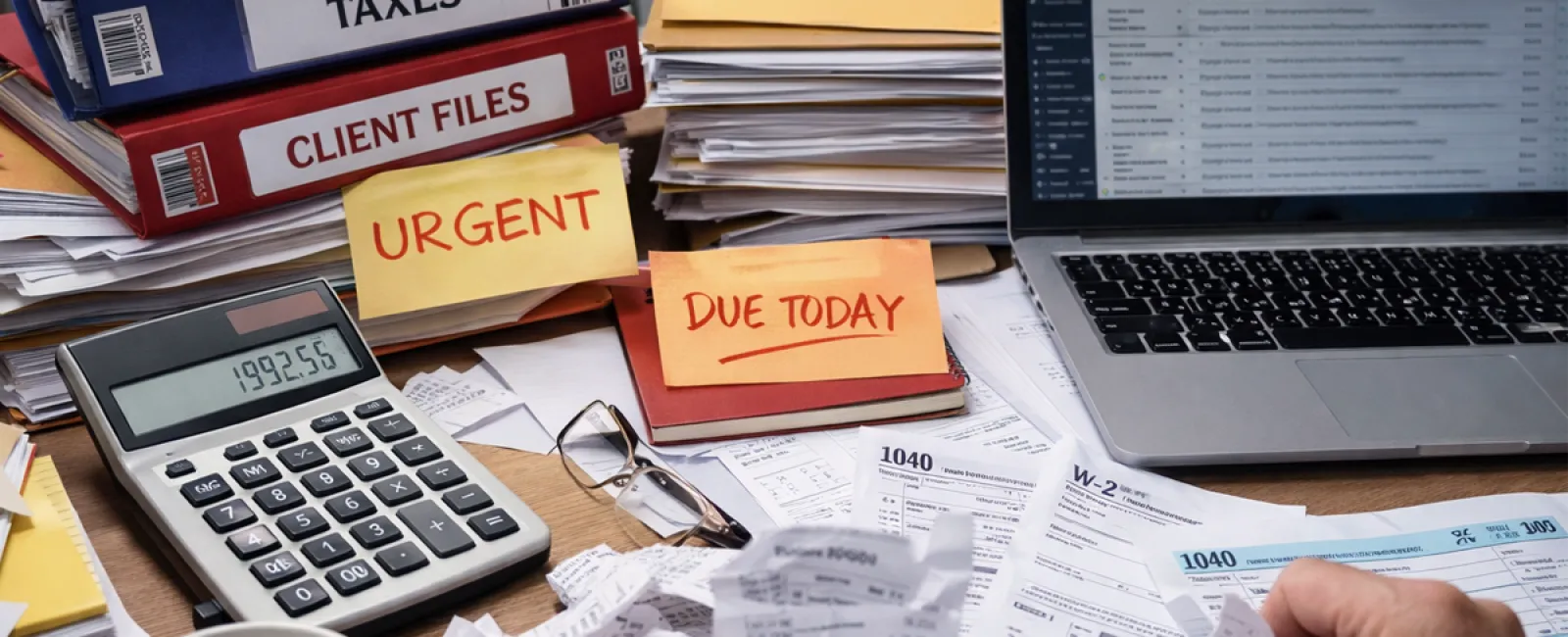
March has arrived.
Your accountant is overwhelmed, your bookkeeper is rushing against deadlines, and emails are arriving faster than anyone can handle.
Everyone is laser-focused just to make it through the month.
You know this all too well.
But hackers know it too.
Security analysts consistently report a dramatic surge in phishing scams during tax season, with March experiencing about a 28% rise in tax-related scam emails compared to other months. These messages don't stand out.
They're crafted to blend seamlessly into everyday business communications, hitting when people are at their busiest.
This is no accident.
It's perfectly timed.
Here's what you can expect—and four straightforward ways to protect your business from becoming an easy target.
The Overloaded Supply Chain
What many overlook:
Hackers don't only focus on accounting firms.
They exploit the pandemonium surrounding them.
When tax season strikes:
- Clients hurriedly send sensitive documents.
- Staff cut corners on routine checks to keep up.
- "Just send me the file" replaces cautious communication.
- Verification steps are skipped because everyone is overwhelmed.
The entire workflow accelerates.
And it's in this rush where errors thrive.
Hackers don't attack calm, methodical businesses.
They target those stretched thin.
March is exactly that busy.
Recognizing Typical Scam Patterns
This isn't fiction.
Scam emails mimic the very messages you receive daily.
- An email from "your accountant" requesting you resend W-2 forms due to missing data.
- A vendor notification announcing an update to their bank details that requires your action.
- A DocuSign alert urging an immediate signature on a tax document.
- An urgent note from "your CEO" traveling and needing rapid assistance.
These don't raise red flags.
They feel just like routine March correspondence.
That's their power.
Why Busy Professionals Fall for Scams
This isn't about negligence.
It's about being human.
When emails overflow and deadlines tighten, people skim instead of reading carefully. They make assumptions and act swiftly.
Scammers exploit this.
Their messages are crafted to deceive those moving too quickly to spot subtle discrepancies. They don't require recklessness. Just being busy suffices.
And in March, everyone is busy.
Four Effective Steps to Avoid Becoming an Easy Mark
The best news: you don't need high-tech defenses or a security team to lower your risk.
Just adopting a few mindful habits during peak periods can protect you.
1. Confirm payment changes by phone
If you receive notice of vendor bank detail changes, don't respond to the email.
Instead, call a trusted number to verify the update directly.
This simple practice stops some of the costliest scams in their tracks.
2. Take your time with sensitive information requests
Urgency should trigger caution, not haste.
If someone demands W-2s, tax files, or financial data "immediately," pause and verify before complying.
A genuine sender understands a brief delay; a scammer won't.
3. Validate "urgent" requests using alternative communication
For emails labeled urgent, confirm the request through a separate channel.
A quick phone call, text, or internal message can stop a costly mistake.
Real emergencies endure a two-minute check—fake ones dissolve.
4. Alert your team about scam risks
During this week, remind your team that tax season invites fraud attempts.
Encourage them to slow down, double-check details, and ask questions if something feels off.
This simple cultural shift prevents many headaches down the road.
Key Takeaway
Tax season is stressful enough without falling victim to scams.
The attacks aren't highly sophisticated—they're just well-timed.
They exploit rushed decisions, assumptions, and the collective push to get through March.
There's no need to overhaul your entire system to stay safe.
Simply slow down when urgency strikes and verify details carefully.
Often, that's all it takes.
Quick Busy-Season Security Review
Your business might already have solid safeguards in place, which is excellent.
But if tax season triggers reactive behaviors, or you're unsure how your team handles urgent requests, a quick sanity check could be invaluable.
Schedule a free 15-Minute Discovery Call for a no-pressure assessment.
No scare tactics. Just clear advice on small habits that can prevent major issues.
If you're confident your business is secure, feel free to share this with someone who might benefit.
Click here or give us a call at 714-369-8197 to schedule your free 15-Minute Discovery Call.